
Scratch that: Sherlock now has 15 PB of flash
1774042467437

We are excited to announce a major expansion of Sherlock's /scratch file system. We are adding 5 PB of full-flash storage, bringing the total capacity from 10 PB to 15 PB. This investment directly addresses the sustained capacity pressure we have been managing over the past months, and gives the entire Sherlock user community more headroom to run large, data-intensive workloads without constraint.
Growing demand, growing pressure
Sherlock's /scratch is a purpose-built, high-performance Lustre file system designed to hold active data generated or consumed by computing jobs. As the Sherlock user population has grown and research workflows have become increasingly data-intensive, global utilization of the file system has been rising steadily, despite the 90-day purge policy in place.
To help relieve capacity pressure in the short term, we recently launched a campaign to notify users storing large volumes of cold or inactive data in their $SCRATCH and $GROUP_SCRATCH directories. Many of you responded quickly and removed or moved data you no longer needed on /scratch, and we are genuinely grateful for that. This collective effort helped keep the file system healthy in the short term, and reinforces why we continue to rely on the community to use shared resources responsibly.
What's changing
The expansion adds 5 PB of enterprise SAS SSD storage to the existing Lustre file system, scaling total capacity to 15 PB. The new storage uses dual-ported enterprise-grade SAS SSDs, consistent with the existing architecture. Your existing paths, environment variables ($SCRATCH, $GROUP_SCRATCH), and quotas all remain unchanged.
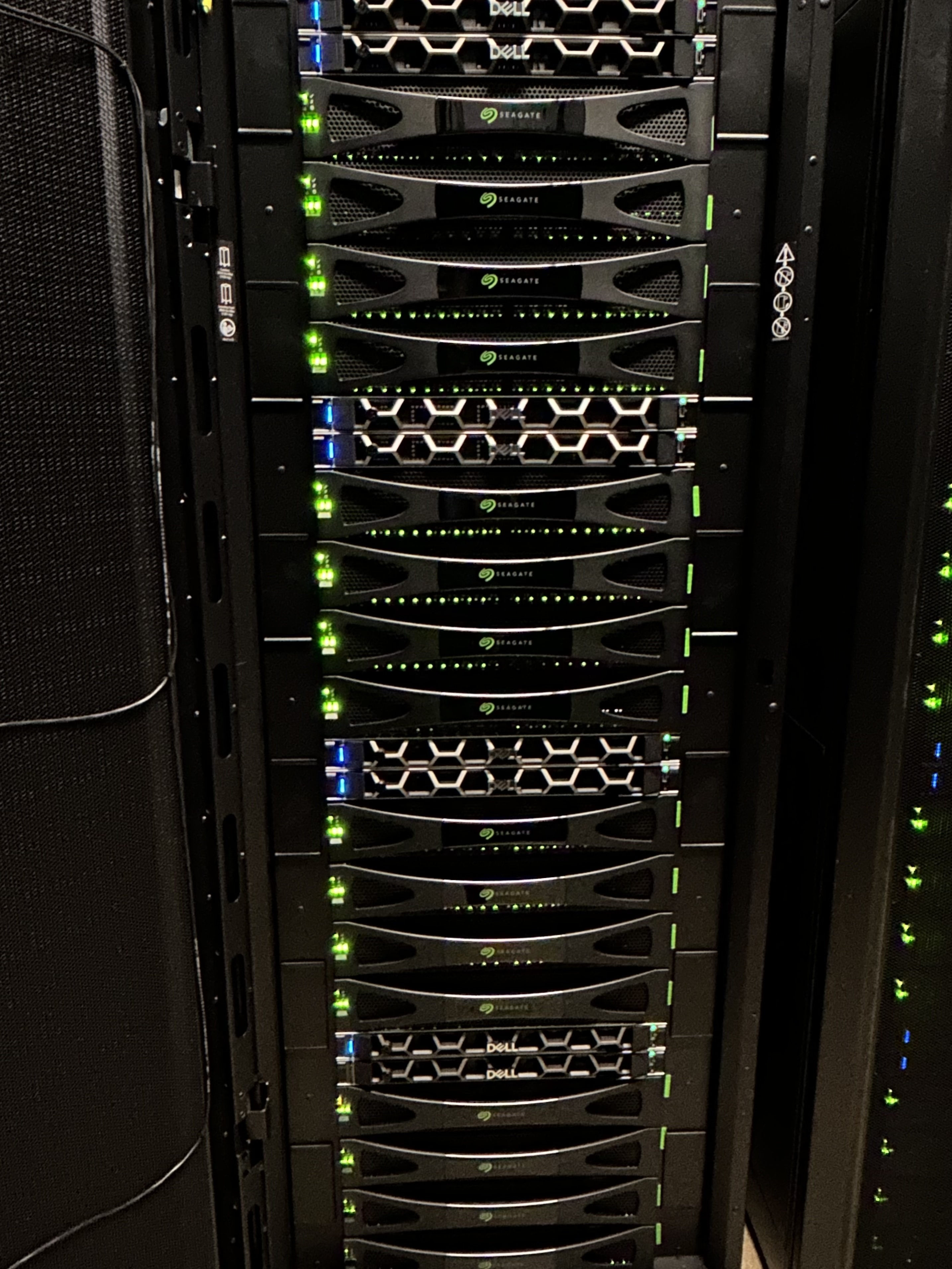 | 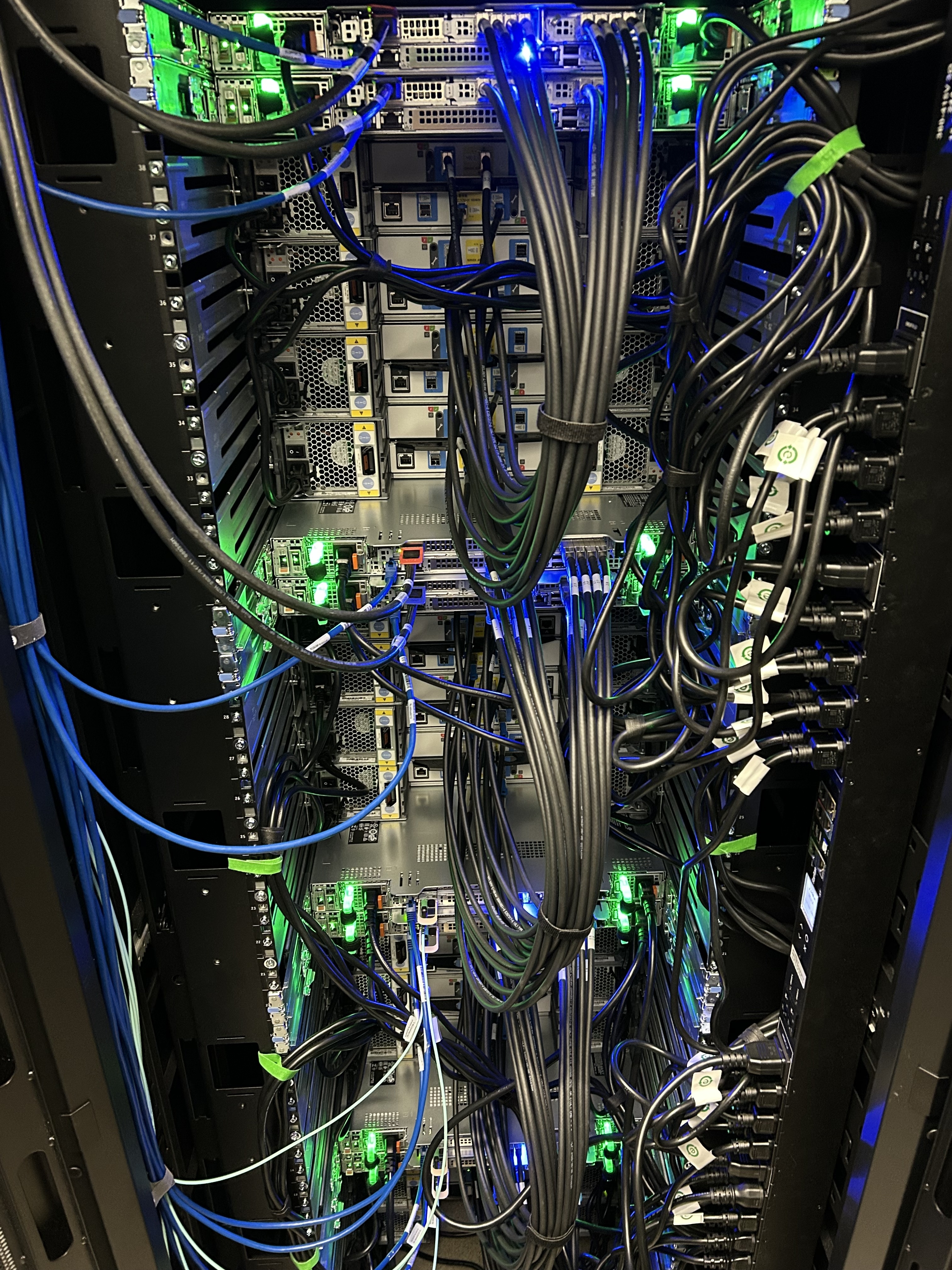 |
Beyond raw capacity, this expansion also increases the overall I/O performance of the file system by an extra 50%: eight new Infiniband NDR links provide 3.2Tb/s (400 GB/s) of additional bandwidth to the file system.
Lustre's architecture distributes file data across Object Storage Targets (OSTs) hosted on independent Object Storage Servers (OSS). Because each new OSS node contributes its own I/O bandwidth independently, aggregate throughput scales nearly linearly with the number of OSTs in the file system. Adding 5 PB of new storage means adding new OSS nodes and OSTs, which directly increases the total bandwidth available to all users, not just the available space.
/scratch is still a temporary file system
This expansion gives us more room to breathe, but it does not change what /scratch is designed for. It remains a temporary, high-performance workspace for data that is actively read or written by running jobs. It is not a backup target, a repository for inactive datasets, or a substitute for long-term storage.
If you have data that you want to keep beyond the 90-day retention window, please transfer it to a storage platform designed for that purpose, such as Oak. For a full comparison of available storage locations and their intended use cases, see the Sherlock storage documentation.
Committed to keeping Sherlock fast and valuable to everyone
Expanding /scratch by 50% represents a significant financial investment from Stanford Research Computing, and one we don't make lightly. Flash storage at this scale is expensive, and the decision to invest in it reflects how seriously we take our commitment to providing Stanford researchers with a fast, reliable, and freely available high-performance computing environment. With 15 PB of all-flash storage, Sherlock features one of the largest full-flash Lustre file systems in Academia today. We believe that removing storage bottlenecks is as important to your research as the compute resources themselves.
We also want to thank every user who responded to our cleanup campaign and took time to review their storage footprint. This expansion buys us headroom, but your collective cooperation in keeping /scratch lean and purposeful is what makes it sustainable long-term.
If you have questions about storage on Sherlock or need help deciding where to put your data, please feel free to reach out at [email protected].
Happy computing!
Did you like this update?